Online Catalogue with all Lots / Auction 159
From noble estates and bourgeois property.
Rare Books, Prints, and Classical art
Saturday, 25 April 2026 at 10:00 am - After sale
Lot 1424 Sammlung von 33 …
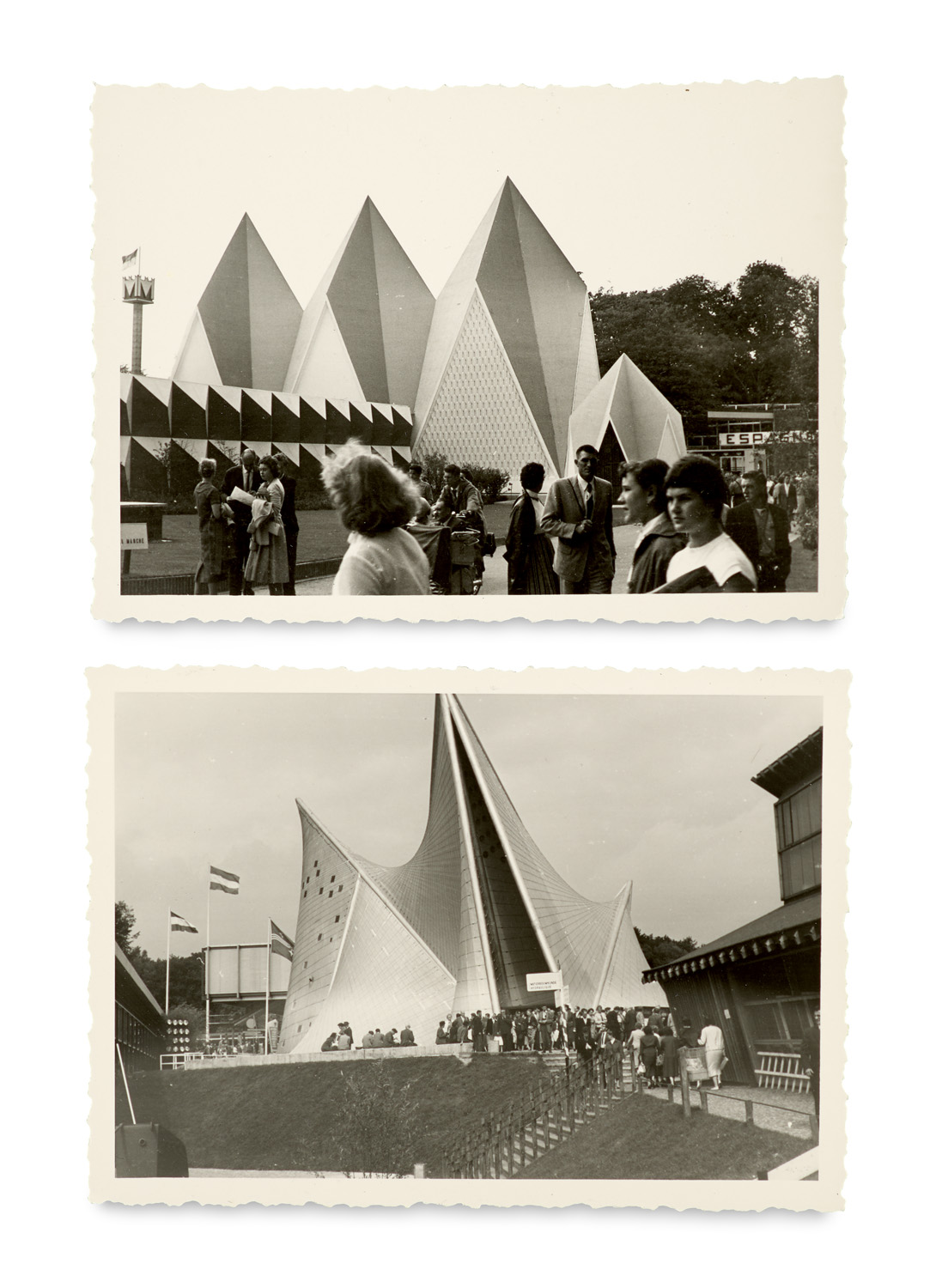
Sammlung von 33 Originalphotographien der Weltausstellung Expo 58 in Brüssel. Silbergelatine auf Leonar Papier. Vintages. Je ca. 7,3 x 10 cm.
Weltausstellungen
Photographie - Photographen – Enthält zahlreiche Aufnahmen der wichtigen Pavillions. - Die Expo 58 in Brüssel war vor allem eine Schau moderner Architektur, in der einige Bauten und Architekten sinnbildlich für das Selbstverständnis des "Atomzeitalters" standen. Am eindrucksvollsten prägte das Atomium von André Waterkeyn (mit Jean und André Polak als ausführenden Architekten) das Bild der Ausstellung: Der 102 Meter hohe Stahlbau vergrößert eine Elementarzelle des Eisenkristalls um ein Milliardenfaches, verbindet neun Kugeln über Röhren und Rolltreppen und inszeniert so Schwerindustrie, Ingenieurskunst und Zukunftsglauben in einer einzigen begehbaren Skulptur. Zu Füßen des Atomiums lagen die monumentalen Hallen des Heysel-Plateaus, darunter der bereits für die Ausstellung von 1935 errichtete, gestufte "Jahrhunderthallen"-Komplex mit seinem breit vorspringenden Mittelbau, der als Hauptpavillon diente und Interbellum-Architektur mit der neuen Leichtigkeit der 1950er Jahre verband. Besonders einflussreich war der Pavillon der Bundesrepublik Deutschland von Sep Ruf und Egon Eiermann: eine lockere Gruppe von acht rechtwinkligen, flach gedeckten Pavillons, die durch Stege verbunden um einen Hof angeordnet waren und mit durchlässigen Fassaden, viel Glas und filigranen Stützen Transparenz, Offenheit und demokratischen Neubeginn symbolisierten. Ein weiteres Schlüsselwerk war der tschechoslowakische Pavillon der Architekten Frantisek Cubr, Josef Hrubý und Zdenek Pokorný, der mit seiner leichten, verglasten, auf Stützen schwebenden Konstruktion und der klaren, geometrischen Formensprache zum Prototyp des sogenannten "Brüsseler Stils" wurde und für diesen Entwurf den renommierten Golden-Star-Preis erhielt. Daneben traten zahlreiche weitere nationale Pavillons mit kühnen Dachkonstruktionen und freitragenden Hallen - etwa der große, kuppelüberwölbte US-Pavillon - hinzu, sodass zeitgenössische Beobachter die Expo 58 als "Angelegenheit der Architekten" und als "fair of roofs" beschrieben, in der neue Tragwerke, transparente Fassaden und technische Symbolik wichtiger waren als reine Fassadenrepräsentation. - Wohlerhalten.
Photography – Collection of 33 original photographs from the 1958 World's Fair (Expo 58) in Brussels. Gelatin silver prints on Leonar paper. Vintage prints. Each approx. 7.3 x 10 cm. - Contains numerous photographs of the important pavilions. - Expo 58 in Brussels was above all a showcase of modern architecture, in which several buildings and architects became emblematic of the self-image of the "atomic age." The most impressive structure shaping the image of the exhibition was the Atomium by André Waterkeyn (with Jean and André Polak as the executing architects): the 102-meter-high steel construction enlarges an elementary cell of the iron crystal by a factor of billions, connects nine spheres by tubes and escalators, and thus stages heavy industry, engineering skill, and faith in the future in a single walk-in sculpture. At the foot of the Atomium lay the monumental halls of the Heysel plateau, among them the stepped "Jahrhunderthallen" complex, erected already for the 1935 exhibition with its broad projecting central block, which served as the main pavilion and combined interwar architecture with the new lightness of the 1950s. Particularly influential was the pavilion of the Federal Republic of Germany by Sep Ruf and Egon Eiermann: a loose group of eight right-angled, flat-roofed pavilions, arranged around a courtyard and connected by walkways, whose permeable façades, extensive glazing, and slender supports symbolized transparency, openness, and a democratic new beginning. Another key work was the Czechoslovak pavilion by the architects Frantisek Cubr, Josef Hrubý, and Zdenek Pokorný, whose light, glazed structure, seemingly floating on supports, and clear, geometric formal language became the prototype of the so-called "Brussels style" and was awarded the prestigious Golden Star Prize for this design. In addition, numerous other national pavilions with bold roof constructions and column-free halls - for example the large, domed U.S. pavilion - contributed to the impression that contemporary observers described Expo 58 as an "affair of the architects" and a "fair of roofs," in which new structural systems, transparent façades, and technical symbolism were more important than pure façade representation. - Well preserved.
Post Auction Price: 200 €
Premium and taxation
This piece is subject to differential taxation. There is a 29,5% buyer's premium on the hammer price. The value added tax is included but not displayable according to §25a UstG.
Shipping
A pickup of this work is possible in our premises at Potsdamer Str. 16, 14163 Berlin by appointment. If you wish a shipment of the work, please contact us for a consultation and shipping calculation. Framed tickets are shipped exclusively by a shipping company due to the risk of breakage. Postal shipping is only carried out at the express request and risk of the buyer.
Terms and Conditions
You can view our terms and conditions here
Droit de Suite
On the sales proceeds of all original works of fine art and photography, whose authors have not yet died 70 years before the end of the sale, an additional 2% (subject to change) of the hammer prices from 400€ will be charged pro rata for the VG Bild-Kunst, which represents the copyrights of visual artists according to § 26 UrhG.
Submit a bid
I would like to participate in your auction by accepting the General Terms and Conditions of Jeschke van Vliet Auctions Berlin GmbH.