Online Catalogue with all Lots / Auction 161
Rare Books, Prints, Historical Photography
Saturday, 24 October 2026
Lose 1 - 1706
Lot 258 Tikun (Tikkun) Leil Shavuot und Leil Hoschana Rabba. Tikkun Leil Schawuot we-Leil …
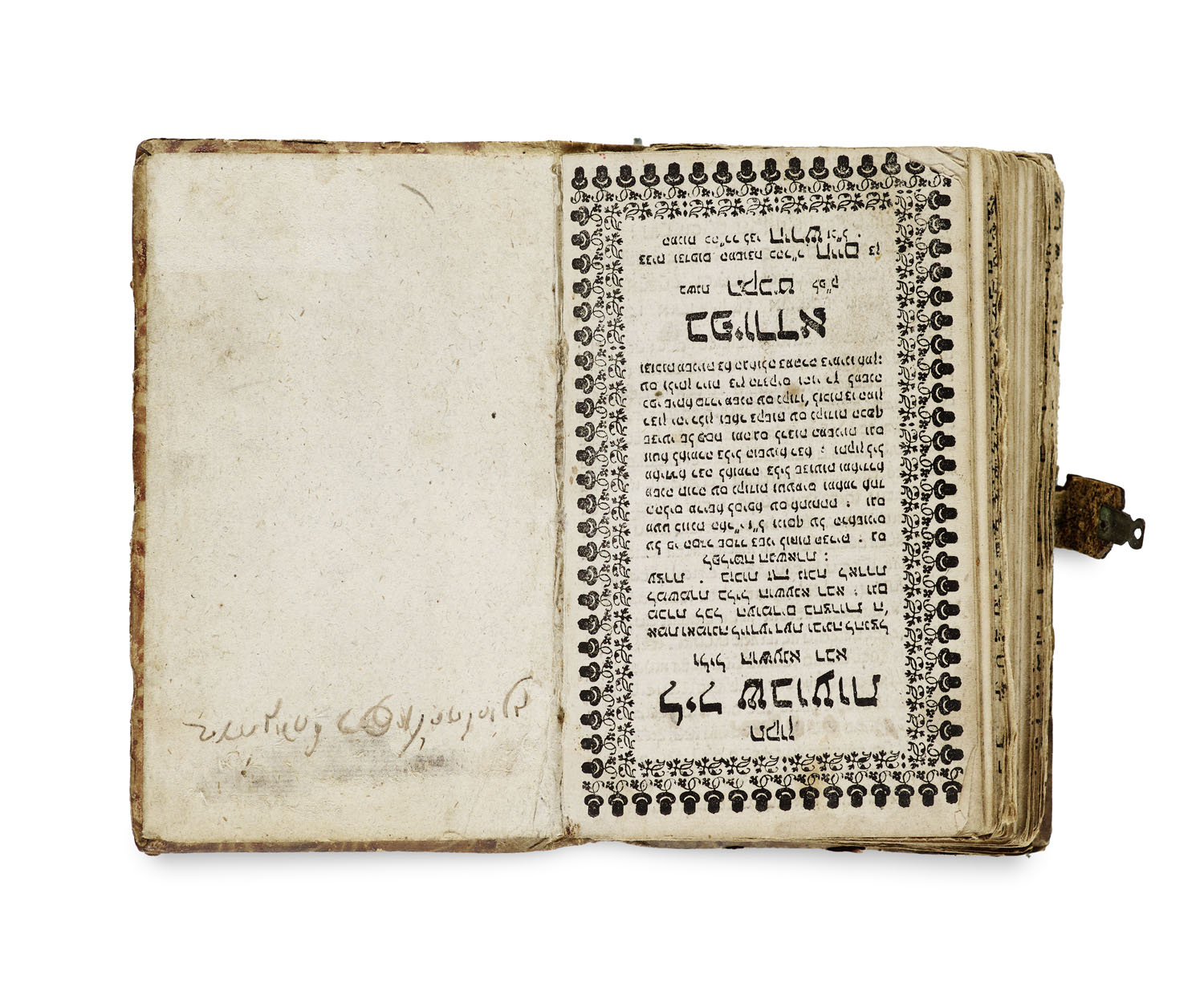
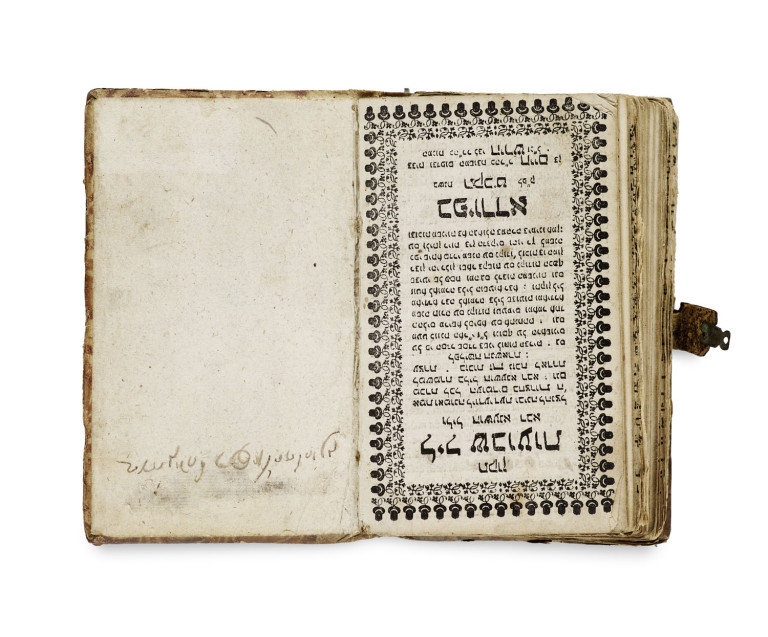
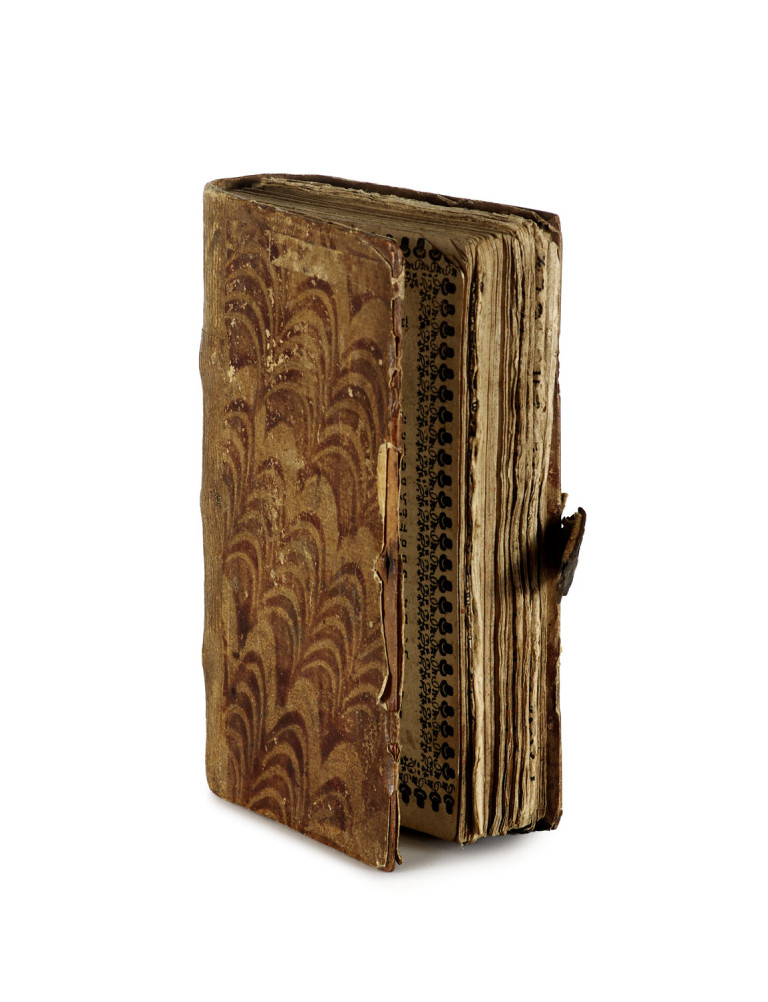
Tikkun Leil Schawuot we-Leil Hoschana Rabba. (Hebräisch.) Fürth: Chajim b. Zwi Hirsch, um 1740-1770. Angebunden: Buch der Psalmen, mit Einleitung. Be-Fiorda Fürth, Gedruckt von Chaim, Sohn des verstorbenen Zvi Hirsch., (1769) (Jahr 5529 nach jüdischer Zeitrechnung, was dem Jahr 1769 entspricht..) 92 Bll. Halbpergament Einband mit hss. RTitel und Buntpapierbezug über Holzdeckeln mit einer (leicht lockereren) Schließe.
Judaica
Geschichtswissenschaften – Nicht im VD 18. - Vgl. Leopold Löwenstein: Zur Geschichte der Juden in Fürth, Teil 3: Die hebräischen Druckereien in Fürth, Frankfurt am Main: Golde, 1913, S. 4 f., Marvin J. Heller: Printing the Talmud. A History of the Individual Treatises Printed from 1700 to 1750, Leiden/Boston/Köln: Brill 1999, S. 161-177. - Sehr seltener Fürther Druck eines Tikkun Leil Schawuot und Tikkun Leil Hoschana Rabba - Jener Sammlung von Auszügen aus Tora, Propheten und weiteren heiligen Schriften, die traditionell in den Nächten des Schawuot-Festes und des Hoschana Rabba durchwacht und studiert wird. Beide Tikkunim wurden im 18. Jahrhundert regelmäßig gemeinsam gedruckt, textliche Grundlage solcher Ausgaben ist üblicherweise die Ordnung nach Jesaja Horowitz' "Schnei Luchot ha-Brit" samt den lurianischen Kawwanot. Fürth war an dieser Gattung früh beteiligt: Die "Tikkunei ha-Moadim" erschienen hier 1725 und 1729 und gelten als die umfangreichste Sammlung volkssprachlicher Kabbala in altjiddischer Literatur. Die Offizin Chajim b. Zwi Hirsch aus Wilhermsdorf richtete 1737 - nach siebenjähriger Unterbrechung des hebräischen Buchdrucks in Fürth - eine Druckerei im Schindelhof (Schindelgasse 10) ein und leitete sie 35 Jahre bis zu seinem Tod am 11. September 1772. Zeitweise wirkte sein Vater Zwi Hirsch b. Chajim (1683-1772) mit, der die Wilhermsdorfer Presse von Israel ben Meir aus Prag übernommen hatte, ihr von 1712 bis 1739 vorstand und den Betrieb 1739 nach Fürth verlegte, wo er bis 1753 mehrere Werke herstellen ließ. Insgesamt gingen aus der Offizin gut 80 Druckwerke hervor, sie gilt als die bedeutendste, langlebigste und erfolgreichste hebräische Druckerei Fürths, geschützt durch ein fürstlich Hohenlohesches Privileg, dessen Angehörige kein Judenabzeichen tragen mussten und deren Gesellen allein nach dem Urteil ihres Prinzipals heiraten durften. Bei Großprojekten wie illustrierten Machsorim arbeitete das Haus mit dem Fürther Konkurrenten Itzig ben Löb Buchbinder aus der Alexanderstraße zusammen.
History – Bound with: Book of Psalms, with introduction. Be-Fiorda Fürth, printed by Chaim, son of the late Zvi Hirsch.., 1769 (year 5529 of the Jewish calendar, corresponding to 1769..). 92 leaves. Half-vellum binding with manuscript spine title and decorated-paper covering over wooden boards, with one (slightly loose) clasp. Half-vellum binding with manuscript spine title and decorated-paper covering over wooden boards, with one (slightly loose) clasp. - A very rare Fürth printing of a Tikkun Leil Shavuot and Tikkun Leil Hoshana Rabbah - that collection of excerpts from the Torah, the Prophets and other sacred writings which is traditionally studied throughout the nights of the Feast of Shavuot and of Hoshana Rabbah. In the eighteenth century the two Tikkunim were regularly printed together, the textual basis of such editions is usually the order given in Isaiah Horowitz's "Shnei Luchot ha-Brit", together with the Lurianic Kavvanot. Fürth was involved in this genre at an early stage: the "Tikkunei ha-Moadim" appeared here in 1725 and 1729 and are regarded as the most extensive collection of vernacular Kabbalah in Old Yiddish literature. The printing house: Chajim b. Zwi Hirsch of Wilhermsdorf established a press in the Schindelhof (Schindelgasse 10) in 1737 - after a seven-year interruption of Hebrew printing in Fürth - and directed it for 35 years until his death on 11 September 1772. For a time his father Zwi Hirsch b. Chajim (1683-1772) worked alongside him, he had taken over the Wilhermsdorf press from Israel ben Meir of Prague, headed it from 1712 to 1739, and moved the business to Fürth in 1739, where he had several works produced until 1753. In all, a good 80 printed works issued from this office, it is considered the most important, longest-lived and most successful Hebrew printing house in Fürth, protected by a princely Hohenlohe privilege under which its members were exempt from wearing the Jewish badge and its journeymen could marry solely on their master's judgement. On large projects such as illustrated Machzorim the house collaborated with its Fürth competitor Itzig ben Löb Buchbinder of Alexanderstraße.
Startprice: 700 €
Estimate: 900 €
Premium and taxation
This work is subject to under the regular margin scheme. There is a 24.95% buyer's premium on the hammer price and inside the EU 7% (Books, Paintings, Drawings and most Prints) and 19% (Photographs, Screen and Offsetprints, Autographs and Manuscripts) VAT on the final invoice amount.
Shipping
A pickup of this work is possible in our premises at Potsdamer Str. 16, 14163 Berlin by appointment. If you wish a shipment of the work, please contact us for a consultation and shipping calculation. Framed tickets are shipped exclusively by a shipping company due to the risk of breakage. Postal shipping is only carried out at the express request and risk of the buyer.
Terms and Conditions
You can view our terms and conditions here
Droit de Suite
On the sales proceeds of all original works of fine art and photography, whose authors have not yet died 70 years before the end of the sale, an additional 2% (subject to change) of the hammer prices from 400€ will be charged pro rata for the VG Bild-Kunst, which represents the copyrights of visual artists according to § 26 UrhG.
Submit a bid
I would like to participate in your auction by accepting the General Terms and Conditions of Jeschke van Vliet Auctions Berlin GmbH.