Online Catalogue with all Lots / Auction 161
Rare Books, Prints, Historical Photography
Saturday, 24 October 2026
Lose 1 - 1706 - After sale
Lot 1599 August Johann Rösel von Rosenhof u. Christian Friedrich Carl Kleemann. Historia Naturalis Ranarum. - …
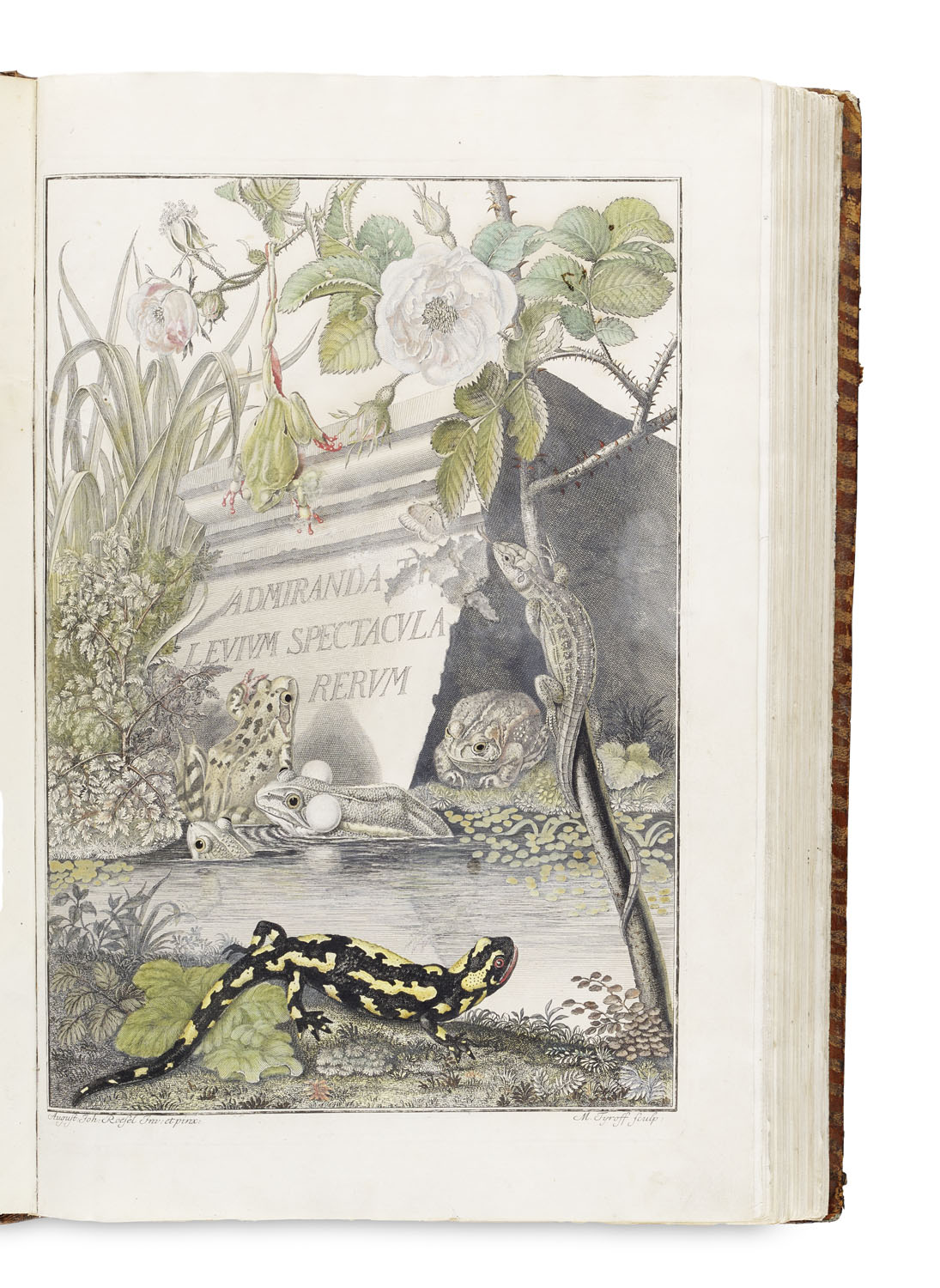
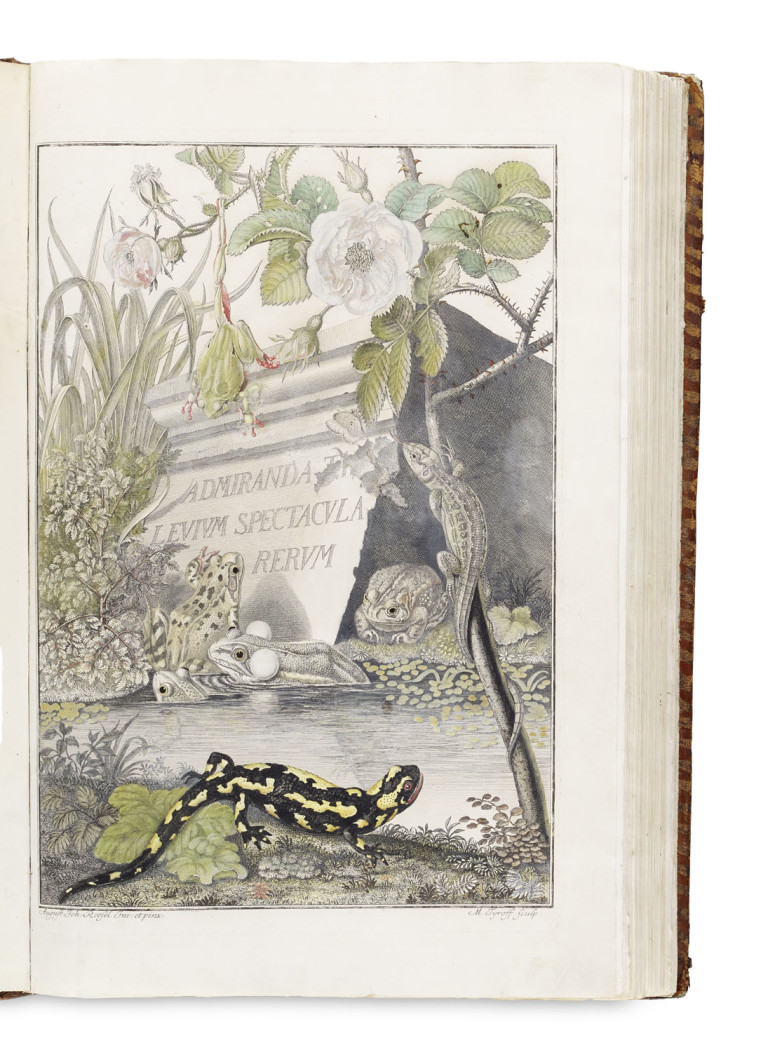

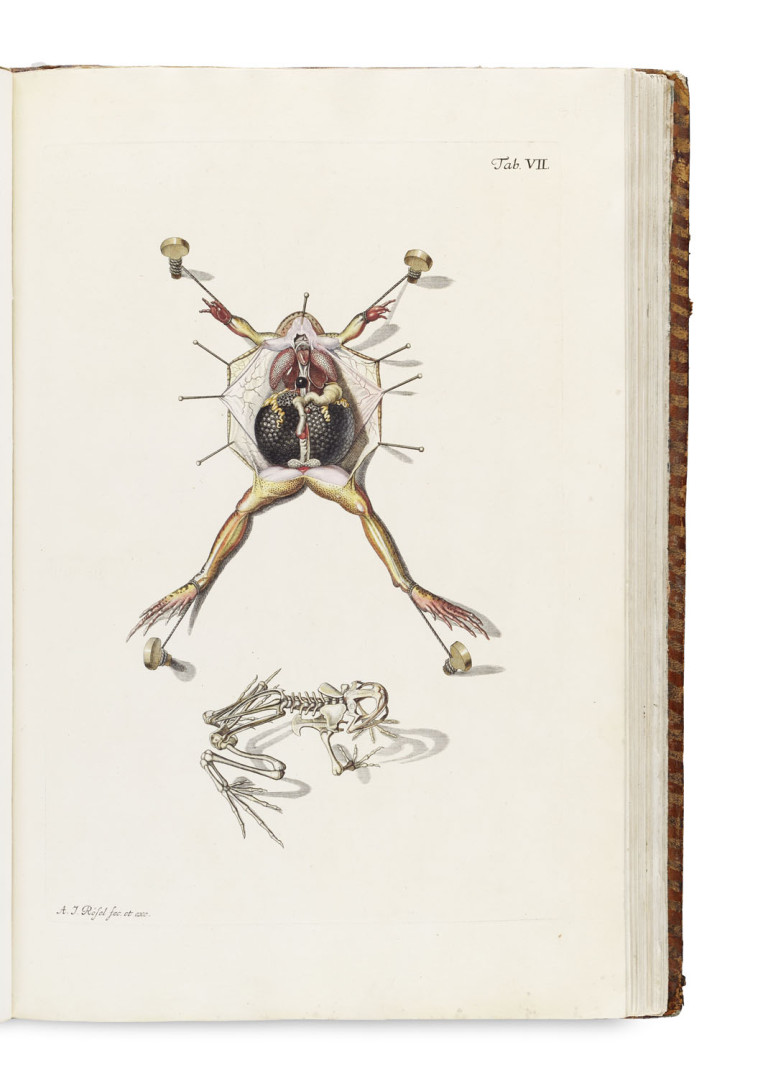
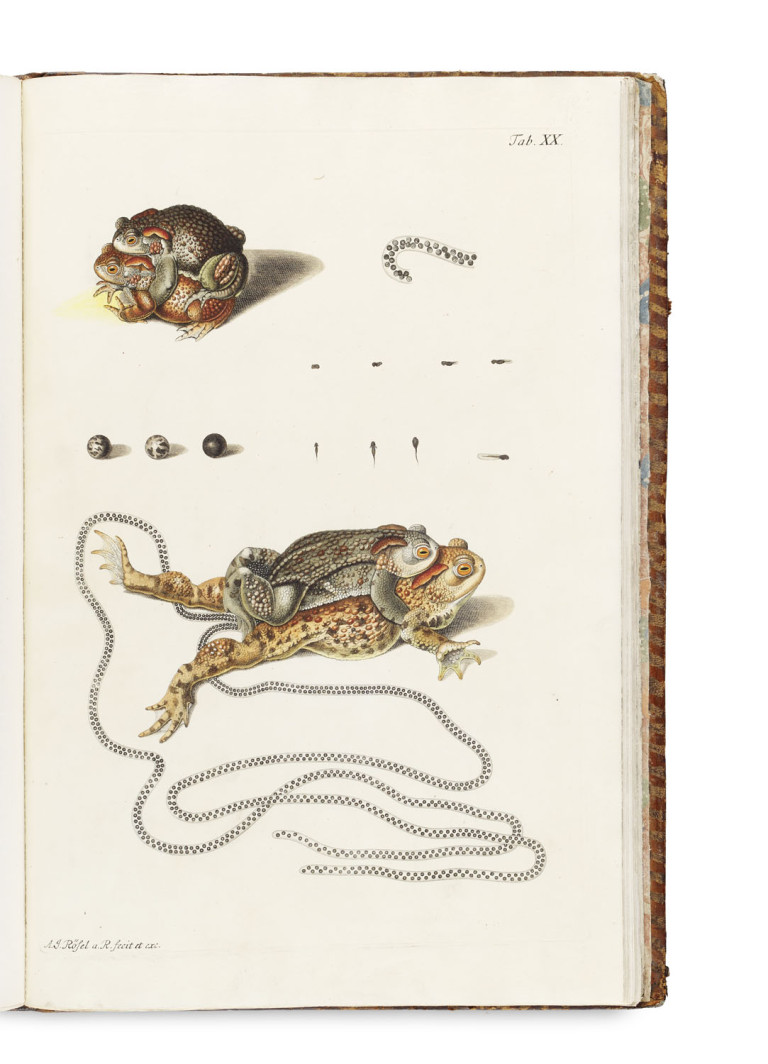
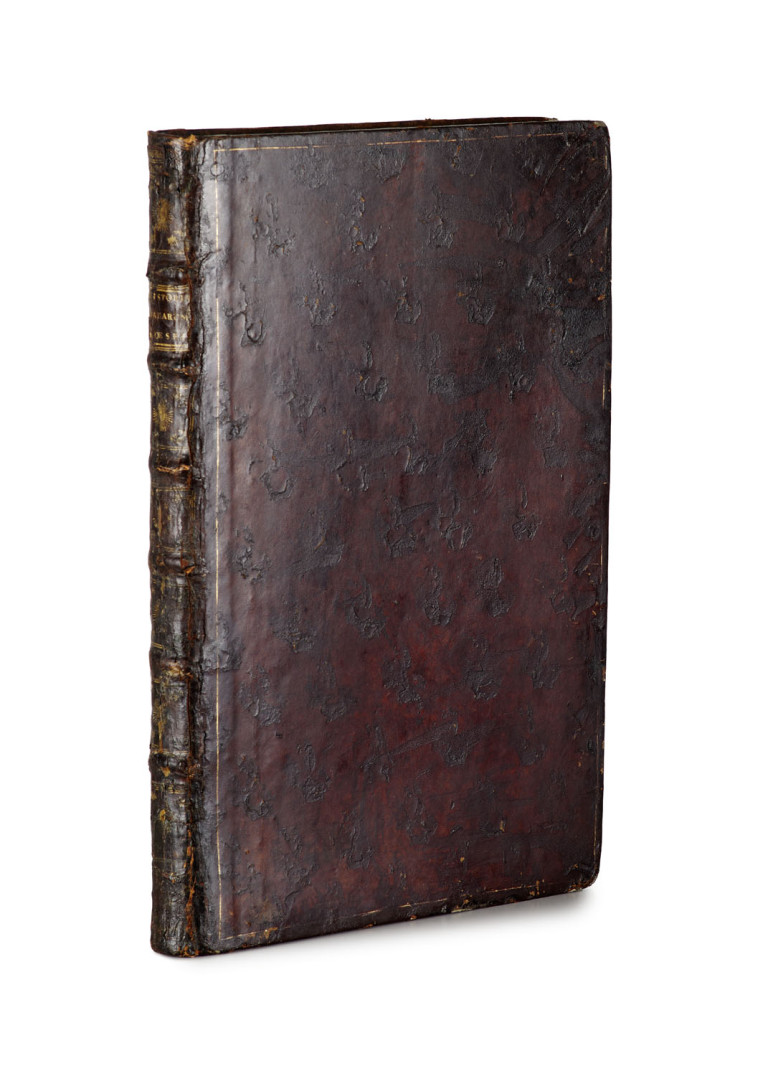
Historia Naturalis Ranarum. - Die natürliche Historie der Frösche hiesigen Landes worinnen alle Eigenschaften derselben sonderlich aber ihre Fortpflanzung umständlich beschrieben werden. Mit einer Vorrede Herrn Albrechts von Haller. Mit einem handkolorierten, von M. Tyroff gestochenen Frontispiz sowie zwei Sätzen der 24 gestochenen Tafeln und 7 gestochenen Kopfvignetten. Nürnberg, Fleischmann, 1758. (8) VIII, 115 (1) S. Großfolio. (Einband minimal bestoßen, Buchrücken erneuert und Originalrücken aufgezogen, einige Schabstellen des Einbands restauriert, Innengelenke mit Leinwandstreifen verstärkt.)
Zoologie - Herpetologie
Naturwissenschaften – Nissen ZBI 3464. - Junk, Rara, S. 162f., Graesse VI, 146. - Erste Ausgabe, sowohl aus künstlerischer als auch aus wissenschaftlicher Sicht von großer Bedeutung. Das 1753 begonnene und 1758 vollendete Tafelwerk gilt als das künstlerisch bedeutendste Werk der gesamten herpetologischen Literatur und markiert zugleich den Beginn der wissenschaftlichen Erforschung der Amphibien in Deutschland. August Johann Rösel von Rosenhof (1705-1759), gelernter Kupferstecher und Miniaturmaler aus Nürnberg, hatte sich nach der Lektüre der Metamorphosenwerke Maria Sibylla Merians der naturkundlichen Beobachtung zugewandt und ab 1746 die "Insecten-Belustigungen" veröffentlicht, bevor er sich um 1750 den Lurchen zuwandte. Der lateinisch-deutsche Paralleltext beschreibt sämtliche damals im Nürnberger Umland bekannten Frosch- und Krötenarten mit bemerkenswerter Genauigkeit in Morphologie, Paarungsverhalten und Fortpflanzungsbiologie, mehrere der abgebildeten Tiere, darunter Bufo calamita und Bufo fuscus, wurden später als Typusexemplare ihrer jeweiligen Art herangezogen. Rösel scheute dabei auch die akribische Darstellung sezierter Exemplare nicht, die er - kreuzigungsähnlich aufgespannt - bis ins kleinste Detail von Hand kolorierte. Die Vorrede verfasste der Universalgelehrte Albrecht von Haller (1708-1777), dessen Empfehlung dem Werk zusätzliches wissenschaftliches Gewicht verlieh. Nach Rösels frühem Tod 1759 - der die auf dem Titelblatt bereits angekündigten Folgebände zu Schwanzlurchen und Eidechsen verhinderte - übernahm Christian Friedrich Carl Kleemann die Fortführung und Vollendung der begonnenen Publikationsprojekte Rösels, weshalb sein Name mit dem Gesamtwerk untrennbar verbunden istDie Illustrationen, an denen neben Rösel sechs weitere Künstler beteiligt waren, gehören hinsichtlich der Genauigkeit der anatomischen Details zu den besten ihrer Art. Rösel schildert detailliert Fortpflanzung, Metamorphose vom Laich über die Kaulquappe bis zum ausgewachsenen Tier, Anatomie und Lebensweise der Frösche und Kröten und begründet damit eine neue, stark bildbasierte Phase der Herpetologie. Wegen der außergewöhnlichen Genauigkeit und künstlerischen Qualität der Tafeln wird die "Naturgeschichte der Frösche Deutschlands" bis heute als eines der schönsten und wissenschaftlich bedeutendsten Amphibienwerke des 18. Jahrhunderts angesehen.
Natural Sciences – With a hand-coloured frontispiece engraved by M. Tyroff, two sets of the 24 engraved plates, and 7 engraved headpieces. First edition, of great significance from both an artistic and a scientific point of view. This plate work, begun in 1753 and completed in 1758, is regarded as the most artistically important work in the entire herpetological literature and at the same time marks the beginning of scientific research into amphibians in Germany. August Johann Rösel von Rosenhof (1705-1759), a trained engraver and miniature painter from Nuremberg, had turned to natural-history observation after reading Maria Sibylla Merian's works on metamorphosis, publishing the "Insecten-Belustigungen" from 1746 onward before turning his attention to amphibians around 1750. The parallel Latin-German text describes all the species of frogs and toads known at the time in the area around Nuremberg with remarkable precision regarding morphology, mating behavior, and reproductive biology, several of the depicted animals, including Bufo calamita and Bufo fuscus, were later used as type specimens for their respective species. In doing so, Rösel did not shy away from the meticulous depiction of dissected specimens, which he hand-colored down to the smallest detail after pinning them out in a crucifixion-like pose. The preface was written by the polymath Albrecht von Haller (1708-1777), whose endorsement lent the work additional scientific weight. Following Rösel's premature death in 1759 - which prevented the sequel volumes on salamanders and lizards already announced on the title page - Christian Friedrich Carl Kleemann took over the continuation and completion of Rösel's ongoing publishing projects, which is why his name is inextricably linked with the work as a whole. The illustrations, on which six other artists collaborated alongside Rösel, rank among the finest of their kind in terms of the precision of their anatomical detail. Rösel describes in detail the reproduction, metamorphosis from egg to tadpole to adult animal, anatomy, and behavior of frogs and toads, thereby establishing a new, strongly image-based phase in herpetology. Because of the extraordinary precision and artistic quality of the plates, the "Natural History of the Frogs of Germany" is regarded to this day as one of the most beautiful and scientifically significant works on amphibians of the eighteenth century.
Post Auction Price: 7000 €
Premium and taxation
This work is subject to under the regular margin scheme. There is a 24.95% buyer's premium on the hammer price and inside the EU 7% (Books, Paintings, Drawings and most Prints) and 19% (Photographs, Screen and Offsetprints, Autographs and Manuscripts) VAT on the final invoice amount.
Shipping
A pickup of this work is possible in our premises at Potsdamer Str. 16, 14163 Berlin by appointment. If you wish a shipment of the work, please contact us for a consultation and shipping calculation. Framed tickets are shipped exclusively by a shipping company due to the risk of breakage. Postal shipping is only carried out at the express request and risk of the buyer.
Terms and Conditions
You can view our terms and conditions here
Droit de Suite
On the sales proceeds of all original works of fine art and photography, whose authors have not yet died 70 years before the end of the sale, an additional 2% (subject to change) of the hammer prices from 400€ will be charged pro rata for the VG Bild-Kunst, which represents the copyrights of visual artists according to § 26 UrhG.
Submit a bid
I would like to participate in your auction by accepting the General Terms and Conditions of Jeschke Jádi Auctions Berlin GmbH.