Online Catalogue with all Lots / Auction 161
Rare Books, Prints, Historical Photography
Saturday, 24 October 2026
Lose 1 - 1706
Lot 1502 Victor Goldschmidt. Krystallographische …
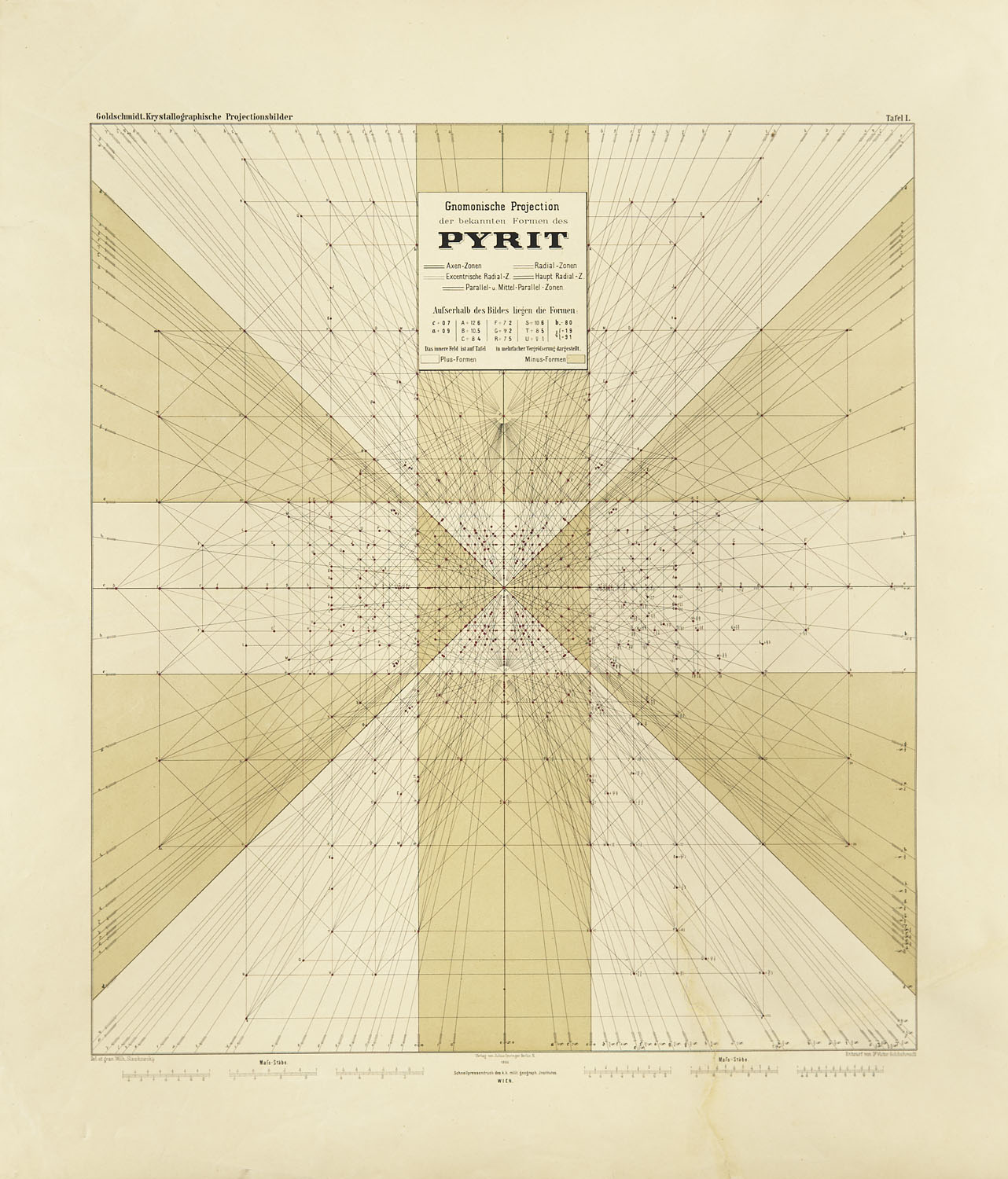
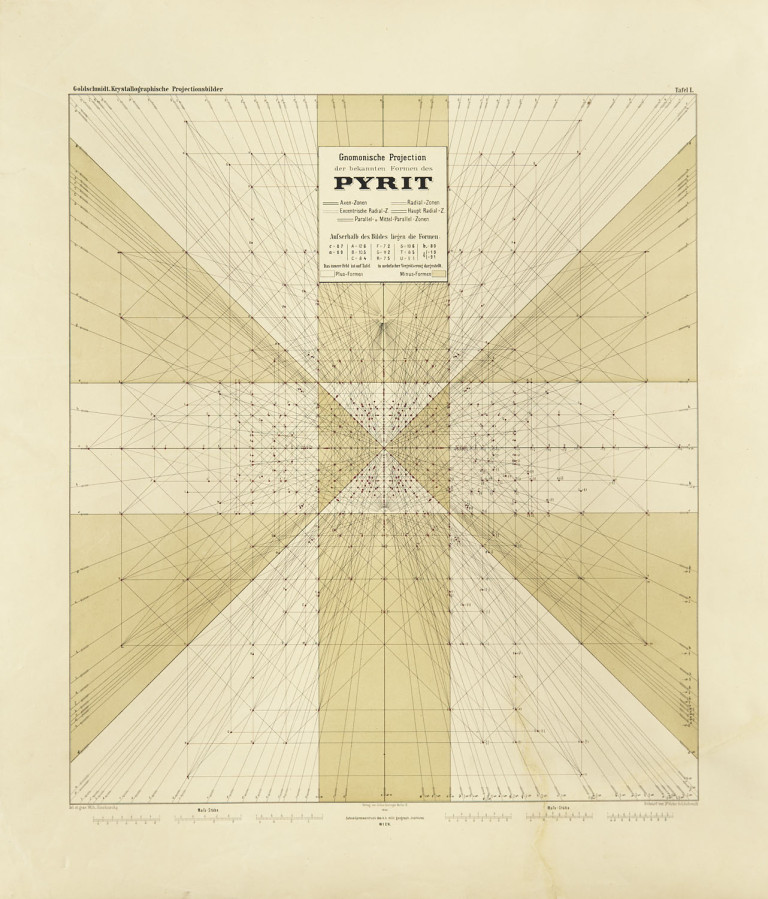
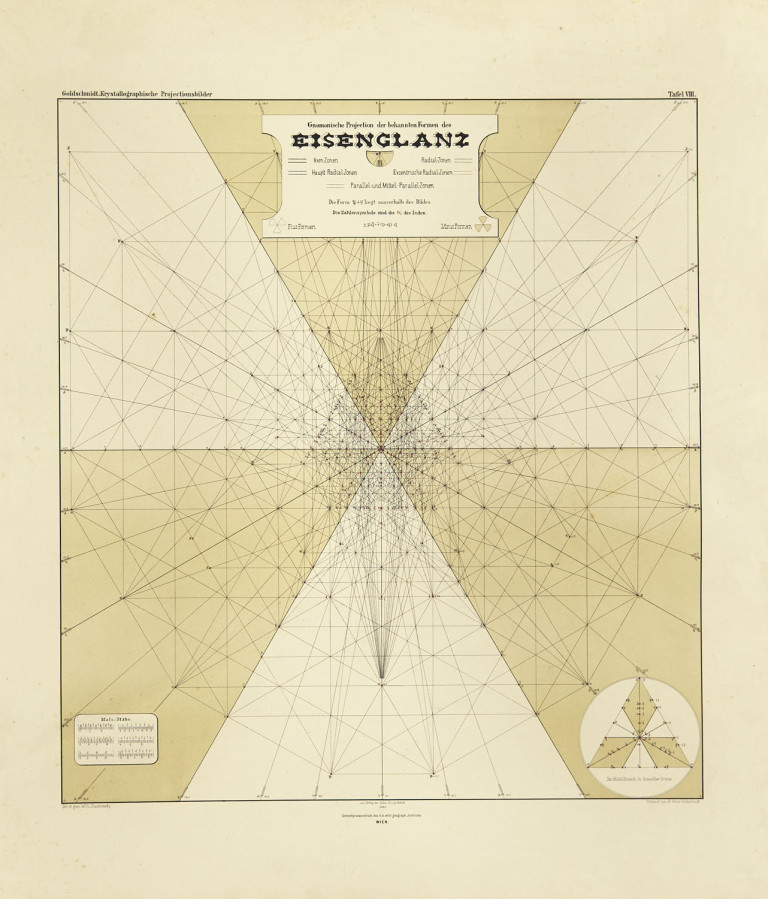
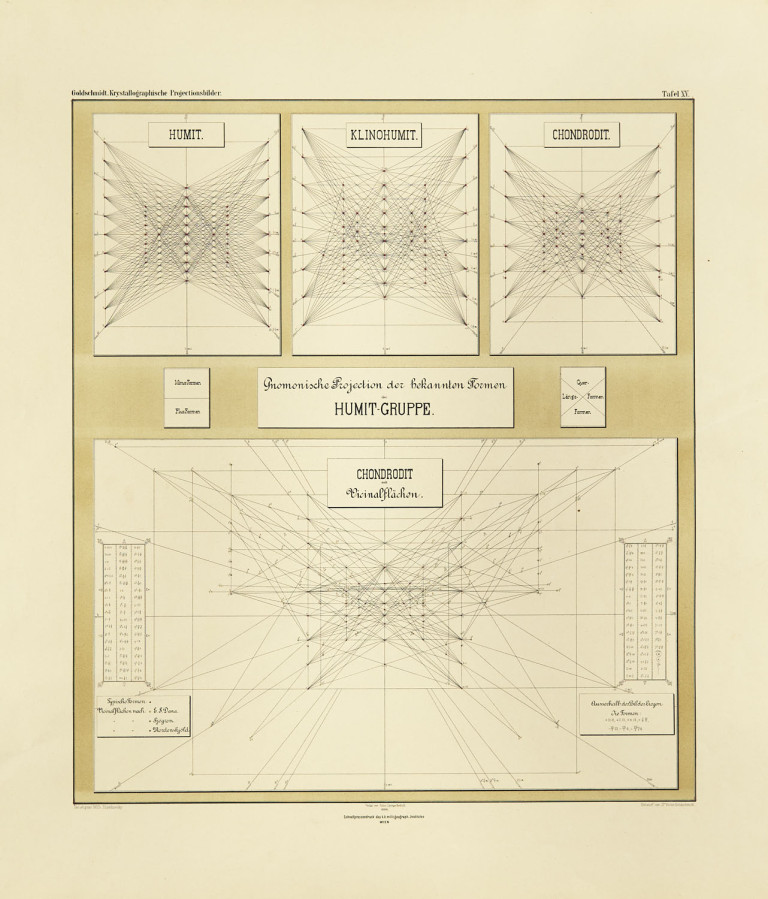
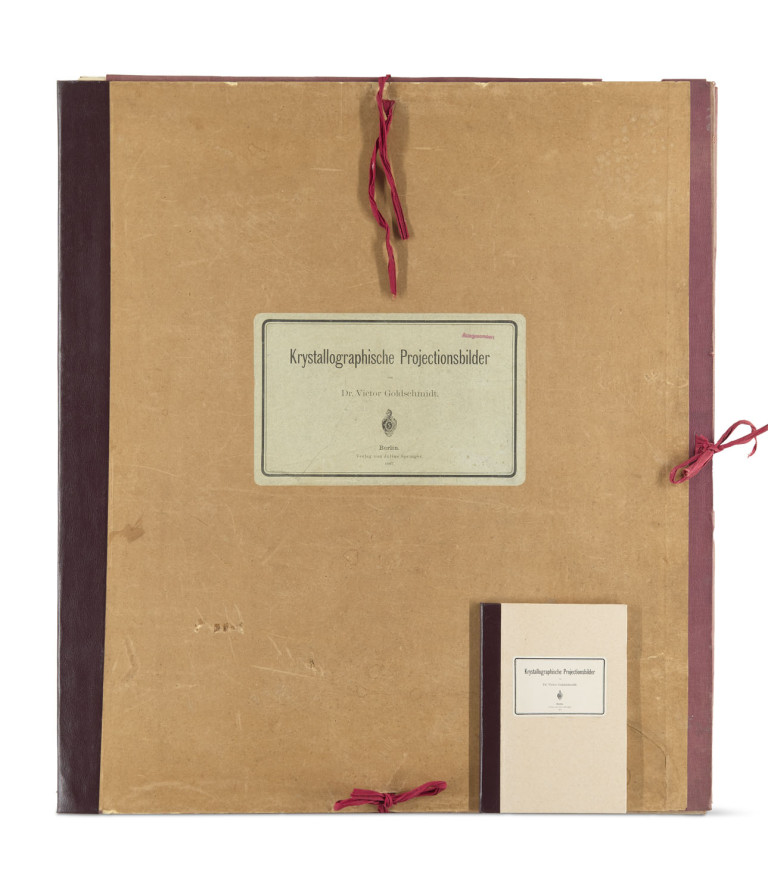
Krystallographische Projectionsbilder. Mit 19 teils farb-lithographischen Tafeln. Zum Theil in Farbendruck. Berlin: Verlag von Julius Springer, 1887. 2 Bde. Text und Atlas. Folio (Atlas) und 8° (Textband in Faksimile). Hldr.-Mappe und Ppbd.
Geologie - Mineralogie
Naturwissenschaften – Hertz, Zeitschrift der Deutschen geologischen Gesellschaft, 1903, 33. - Marshman, Crystallography, XI. - Schuh, Curtis P.: Mineralogical Record Biobibliography, s.v. "Goldschmidt, Victor", online: mineralogicalrecord.com. - Von größter Seltenheit, kein Exemplar auf Auktionen in den letzten 50 Jahren. - Nur wenige physische Exemplare in Bibliotheken (DNB, Leipzig, Stabi Berlin, Libris Stockholm). Das Tafelwerk bildet ein Glied in der Kette der zusammenhängenden Untersuchungen Goldschmidts, deren Veröffentlichung mit seinem monumentalen Index der Krystallformen der Mineralien (Berlin, Springer, 1886-1891) begonnen hatte. Die Projektionsbilder vermitteln zwischen der räumlichen Anschauung der Kristallform und ihrer abstrakten zahlenmäßigen Beschreibung. Die 19 Haupttafeln behandeln in gnomonischer Projektion und als sogenannte "Punktbilder" folgende Mineralarten und -gruppen: Pyrit (Tafeln I-II), Calcit (III-IV), Rotgültigerz (V-VI), mit vergrößertem Ergänzungsblatt der Mittelfelder (VII), Eisenglanz (VIII-IX), Quarz (X-XII, inkl. Mittelfeld in größerem Maßstab), Bournonit (XIII-XIV), Humit-Gruppe: Humit, Klinohumit, Chondrodit (XV-XVI, mit optischen Abmessungen), Magneteisenerz, Beryll, Idokras, Baryt, Epidot, Axinit als Beispiele für rastrierte Blätter (XVII) Amphibol - Ableitung des perspektivischen und horizontalen Bildes aus dem gnomonischen Projektionsbild (XVIII), Anorthit-Zwillingsbilder (Albit-Gesetz, Manebacher-Gesetz) sowie Linienbilder der wichtigsten Zonenentwicklung von Calcit, Rotgültigerz, Eisenglanz und Quarz (XIX) Die Beilagen - ein hexagonales und ein tetragonales Projektionsnetz - waren als praktische Arbeitshilfe zur Eigenüberzeichnung konzipiert und wurden separat zum Preis von je 1,60 M pro vier Blatt angeboten. Sie stellten damit ein optionales, ergänzendes Werkzeug für den wissenschaftlichen Eigengebrauch dar, das über den eigentlichen Werkkorpus hinausging. Diese sind hier nicht enthalten. Goldschmidts Projektionsbilder entstanden in der Ära vor der Röntgenstrukturanalyse, als die Vermessung von Kristallflächen mit dem Goniometer die einzige Methode war, um Symmetrie und Form eines Kristalls exakt zu beschreiben. Die gnomonische Projektion übertrug die gemessenen Flächenwinkel als Punkte auf ein Wulff-Netz und erzeugte so ein vereinfachtes, visuelles Abbild aller bekannten Formen einer Mineralart auf einem einzigen Blatt. Forscher konnten damit neu vermutete Kristallformen unmittelbar gegen Goldschmidts Tafeln abgleichen. Wegen der enormen Formenvielfalt der gewählten Mineralien - insbesondere Pyrit, Calcit und Quarz - war ein derart großes Blattformat notwendig, um die Fülle der Projektionspunkte lesbar darzustellen. Das Werk gilt als "außergewöhnliches und einzigartiges Werk der Kristallographie" und als Nebenprodukt des Index der Krystallformen. - Eine Seite mit restauriertem Einriss, wenige Tafeln mit kleinen Fleckchen, Titel mit kleinem Außenrandabriss. - Ausgesondertes Exemplar des ehemaligen mineralogischen-petrologischen Instituts der Universität Bonn mit Stempel und Entwidmungstempel. - Insgesamt gutes Exemplar des seltenen Werks.
Natural Sciences – Geology. - Mineralogy. - With 19 partly chromolithographic plates. Half-leather portfolio and paper boards. - Hertz, Zeitschrift der Deutschen geologischen Gesellschaft, 1903, 33. - Marshman, Crystallography, XI. - Of the greatest rarity, with no copy appearing at auction in the last 50 years. Only a few physical copies exist in libraries (DNB, Leipzig, Stabi Berlin, Libris Stockholm). The plate volume forms a link in the chain of Goldschmidt's interconnected investigations, whose publication had begun with his monumental Index der Krystallformen der Mineralien (Berlin, Springer, 1886-1891). The projection images mediate between the spatial visualization of the crystal form and its abstract numerical description. The 19 principal plates treat, in gnomonic projection and as so-called "point diagrams," the following mineral species and groups: pyrite (plates I-II), calcite (III-IV), pyrargyrite ("Rotgültigerz," V-VI), with an enlarged supplementary sheet of the central fields (VII), hematite ("Eisenglanz," VIII-IX), quartz (X-XII, including the central field at a larger scale), bournonite (XIII-XIV), the humite group: humite, clinohumite, chondrodite (XV-XVI, with optical dimensions), magnetite, beryl, vesuvianite ("Idokras"), baryte, epidote, and axinite as examples of gridded sheets (XVII), amphibole-derivation of the perspective and horizontal image from the gnomonic projection image (XVIII), anorthite twin images (albite law, Manebach law) as well as line diagrams of the principal zonal development of calcite, pyrargyrite, hematite, and quartz (XIX). The supplements-a hexagonal and a tetragonal projection net-were conceived as a practical working aid for readers to plot their own diagrams and were offered separately at a price of 1.60 M per four sheets. They thus represented an optional, supplementary tool for scholarly personal use, going beyond the actual body of the work itself. These are not present here. Goldschmidt's projection images were created in the era before X-ray structural analysis, when measuring crystal faces with the goniometer was the only method available for precisely describing a crystal's symmetry and form. Gnomonic projection transferred the measured facial angles as points onto a Wulff net, thereby producing a simplified, visual representation of all known forms of a mineral species on a single sheet. Researchers could thus compare newly hypothesized crystal forms directly against Goldschmidt's plates. Because of the enormous diversity of forms found in the chosen minerals-particularly pyrite, calcite, and quartz-such a large sheet format was necessary in order to render the abundance of projection points legibly. The work is regarded as an "extraordinary and unique work of crystallography" and as a by-product of the Index der Krystallformen. - One leaf with a restored tear, a few plates with small spots, title page with a small marginal loss to the outer edge. - Deaccessioned copy from the former Mineralogical-Petrological Institute of the University of Bonn, with ownership stamp and deaccession stamp. - Overall a good copy of this rare work. - Overall a good copy of this rare work.
Startprice: 1200 €
Estimate: 1800 €
Premium and taxation
This work is subject to under the regular margin scheme. There is a 24.95% buyer's premium on the hammer price and inside the EU 7% (Books, Paintings, Drawings and most Prints) and 19% (Photographs, Screen and Offsetprints, Autographs and Manuscripts) VAT on the final invoice amount.
Shipping
A pickup of this work is possible in our premises at Potsdamer Str. 16, 14163 Berlin by appointment. If you wish a shipment of the work, please contact us for a consultation and shipping calculation. Framed tickets are shipped exclusively by a shipping company due to the risk of breakage. Postal shipping is only carried out at the express request and risk of the buyer.
Terms and Conditions
You can view our terms and conditions here
Droit de Suite
On the sales proceeds of all original works of fine art and photography, whose authors have not yet died 70 years before the end of the sale, an additional 2% (subject to change) of the hammer prices from 400€ will be charged pro rata for the VG Bild-Kunst, which represents the copyrights of visual artists according to § 26 UrhG.
Submit a bid
I would like to participate in your auction by accepting the General Terms and Conditions of Jeschke van Vliet Auctions Berlin GmbH.