Online Catalogue with all Lots / Auction 161
Rare Books, Prints, Historical Photography
Saturday, 24 October 2026
Lose 1 - 1706
Lot 128 Bifolium-Fragment zur …
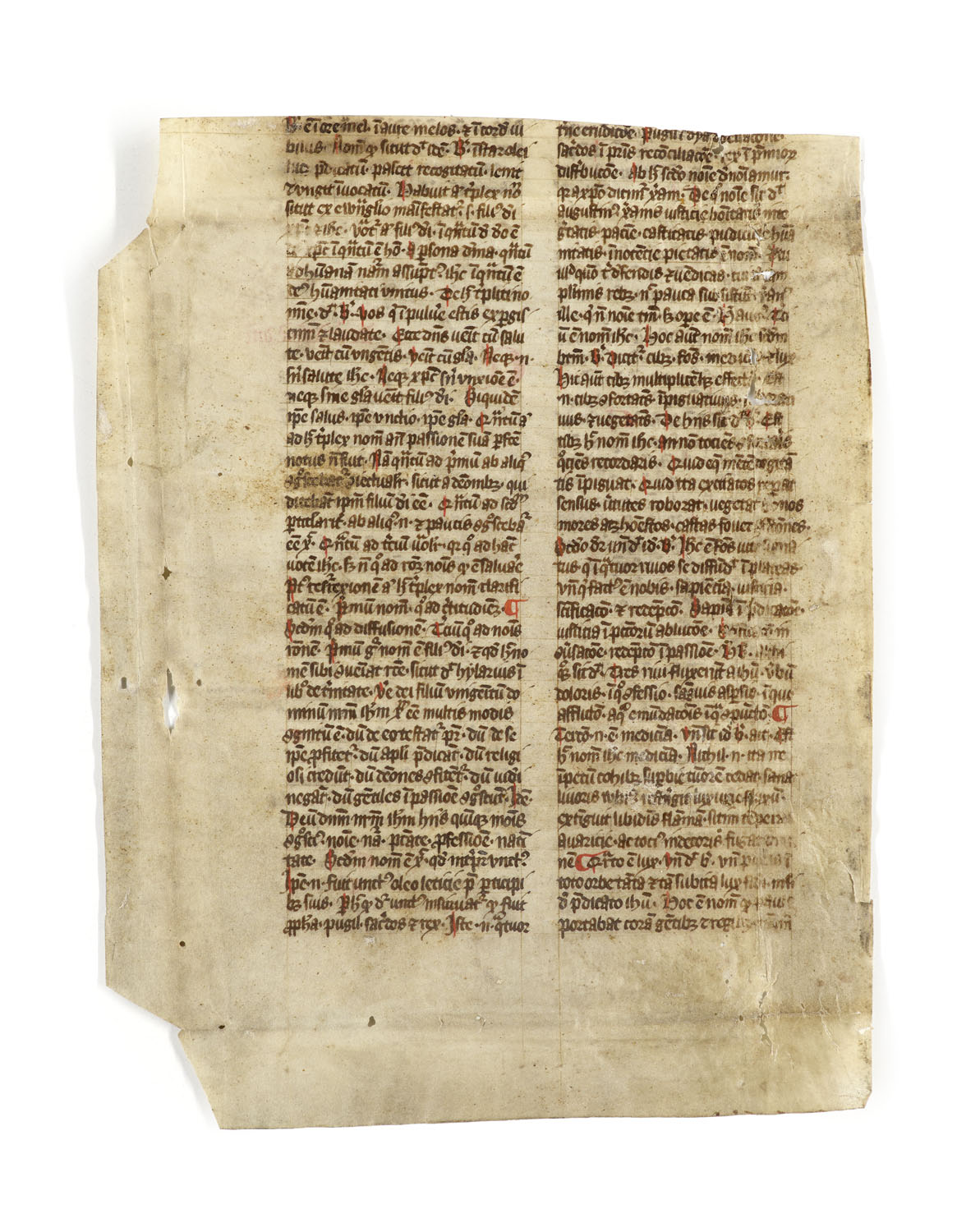
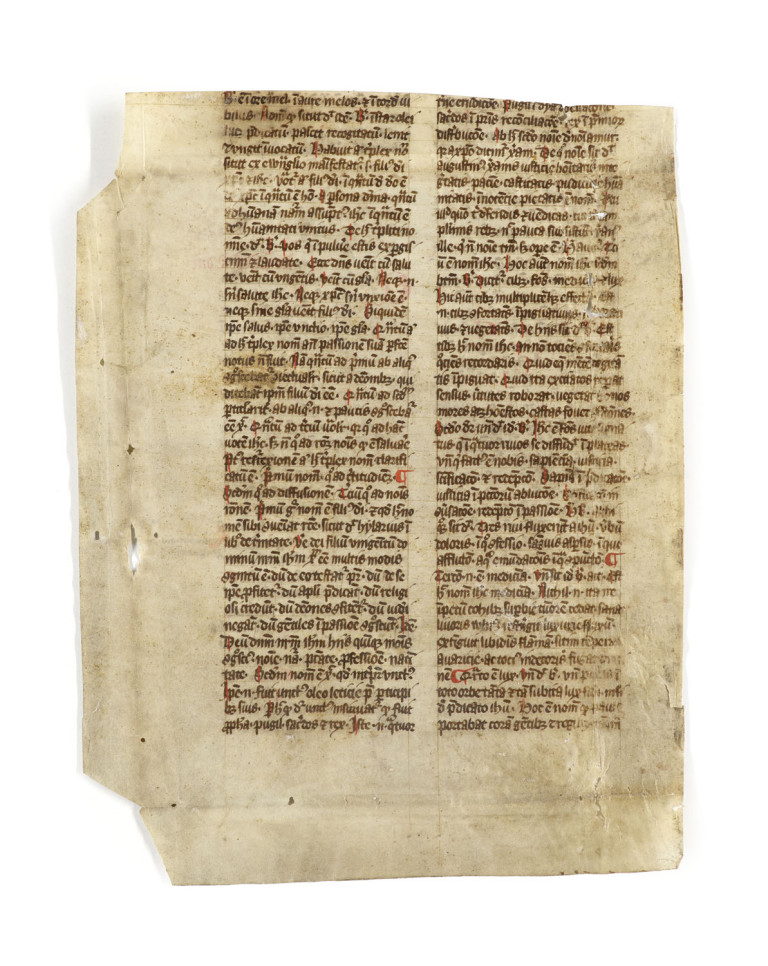
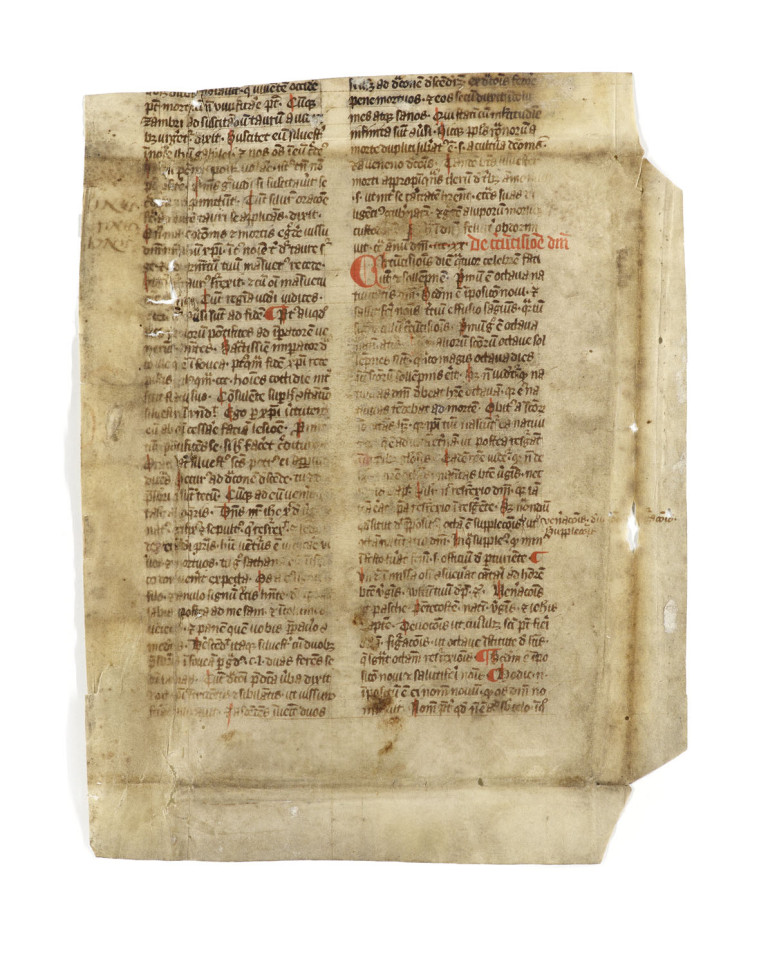
Bifolium-Fragment zur Transfigurationslehre aus einem liturgisch-theologischen Sammelcodex einer spätmittelalterlichen Handschrift. 39 Zeilen. Lateinische Handschrift auf Pergament. Gotische Textualis mit roten Lombarden. Schriftraum 19,6 x 12,2 cm. Format: 24 x 28,4 cm. (Beschnitten). Wohl Frankreich oder Westdeutschland, ca. zweite Hälfte 13. bis frühes 14. Jahrhundert (ca. 1250-1330).
Manuskripte und Urkunden – Zur Proveninenz: Nachlass eines Buchbinders. - Makulaturfragment aus einem Einband. - Zur PALÄOGRAPHIE: Stark gebrochene, stark lateral komptimierte gotische Textualis mit zahlreichen Nonina-sacra Abkürzungen, Kürzungstrichen und Ligaturen - eine für scholastische Gebrauchandschriften des 13. Jahrhunderts kompakte, stark abgekürzte Variante. Zum INHALT: Recto (mit Rubrik "De transfiguratione domini"): Der Text kombiniert eine Passage über Tod und Auferstehung Christi (Anspielungen auf "resurrexit", "mortuos", "Pilatus") mit einem eigenständigen liturgischen Abschnitt zur Verklärung des Herrn. Die Rubriken regeln die Feier der Oktav, der Vigil und der Commemoratio dieses Festes sowie das Verhältnis zu konkurrierenden Herrenfesten (Ostern, Pfingsten). Das Fest der Transfiguration wurde im lateinischen Westen erst ab dem 9./10. Jahrhundert regional übernommen und war noch bis 1457 kein allgemein-kirchliches Fest, sondern wurde lokal unterschiedlich begangen und rubriziert - die im Blatt sichtbare ausführliche Rubrik zu Vigil/Oktav/Commemoratio ist damit ein typisches Zeugnis der vor-tridentinischen, diözesan uneinheitlichen Liturgiepraxis. Verso greift der Text die patristisch-monastische Theologie des Namens Jesu auf, wie sie in Bernhard von Clairvaux im Sermo 15 in Cantica ausformuliert ist: der Name Jesu als "oleum effusum" (ausgegossenes Öl), das Licht, Nahrung und Arznei spendet, sowie die dreifache bzw. vierfache Bedeutungsebene des Namens vor und nach der Passion. Formulierungen wie "nomen ihesu", "passione sua", "unctio" und "ihesus salus, ihesus salvator" lassen sich direkt diesem Predigttext zuordnen, wie sie in monastischen Sammelhandschriften des 13. Jahrhunderts häufig exzerpiert und in Brevierlektionare eingefügt wurden. Die inhaltliche Nähe zu Bernhard von Clairvaux spricht für ein zisterziensisches oder zumindest zisterziensisch beeinflusstes Skriptorium. Mehrfach gefalzt (geglättet), etwas berieben und mit minimalen Wurmfraß. Etwas verschmutzt. - Insgesamt noch gut, seltener Beleg der Transfigurationslehre im zisterziensischen Umfeld.
Manuscripts – Bifolium fragment on the doctrine of the Transfiguration from a liturgical-theological miscellany codex of a late medieval manuscript. 39 lines. Latin manuscript on parchment. Gothic textualis with red lombards. Text area 19.6 x 12.2 cm. Format: 24 x 28.4 cm (trimmed). Probably France or western Germany, ca. second half of the 13th to early 14th century (ca. 1250-1330). Provenance: From the estate of a bookbinder. Waste fragment (Makulatur) from a binding. Palaeography: Heavily broken, strongly laterally compressed gothic textualis with numerous nomina sacra abbreviations, suspension strokes, and ligatures - a compact, heavily abbreviated variant typical of scholastic working manuscripts of the 13th century. Content: Recto (with the rubric "De transfiguratione domini"): the text combines a passage on the death and resurrection of Christ (allusions to "resurrexit," "mortuos," "Pilatus") with a distinct liturgical section on the Transfiguration of the Lord. The rubrics regulate the observance of the octave, the vigil, and the commemoration of this feast, as well as its relationship to competing feasts of the Lord (Easter, Pentecost). The Feast of the Transfiguration was only adopted regionally in the Latin West from the 9th/10th century onward and remained, until 1457, not a universal church feast but was observed and rubricated differently from place to place - the detailed rubric on vigil, octave, and commemoration visible on this leaf is thus a typical witness to pre-Tridentine, diocesan-variant liturgical practice. The verso takes up the patristic-monastic theology of the name of Jesus as formulated by Bernard of Clairvaux in Sermo 15 on the Song of Songs: the name of Jesus as "oleum effusum" (oil poured out), which grants light, nourishment, and medicine, along with the threefold or fourfold levels of meaning of the name before and after the Passion. Phrases such as "nomen ihesu," "passione sua," "unctio," and "ihesus salus, ihesus salvator" can be directly assigned to this sermon text, as it was frequently excerpted in 13th-century monastic miscellanies and inserted into breviary lectionaries. The thematic proximity to Bernard of Clairvaux points to a Cistercian, or at least Cistercian-influenced, scriptorium. Folded several times (now flattened), somewhat rubbed, with minimal worm damage. Somewhat soiled. Overall still in good condition - a rare witness to the doctrine of the Transfiguration in a Cistercian context.
Startprice: 500 €
Estimate: 700 €
Premium and taxation
This work is subject to under the regular margin scheme. There is a 24.95% buyer's premium on the hammer price and inside the EU 7% (Books, Paintings, Drawings and most Prints) and 19% (Photographs, Screen and Offsetprints, Autographs and Manuscripts) VAT on the final invoice amount.
Shipping
A pickup of this work is possible in our premises at Potsdamer Str. 16, 14163 Berlin by appointment. If you wish a shipment of the work, please contact us for a consultation and shipping calculation. Framed tickets are shipped exclusively by a shipping company due to the risk of breakage. Postal shipping is only carried out at the express request and risk of the buyer.
Terms and Conditions
You can view our terms and conditions here
Droit de Suite
On the sales proceeds of all original works of fine art and photography, whose authors have not yet died 70 years before the end of the sale, an additional 2% (subject to change) of the hammer prices from 400€ will be charged pro rata for the VG Bild-Kunst, which represents the copyrights of visual artists according to § 26 UrhG.
Submit a bid
I would like to participate in your auction by accepting the General Terms and Conditions of Jeschke van Vliet Auctions Berlin GmbH.